First Aid Training for Schools on the Gold Coast & Brisbane: What Staff Need, How Onsite Sessions Work, and What Makes Training Actually Stick
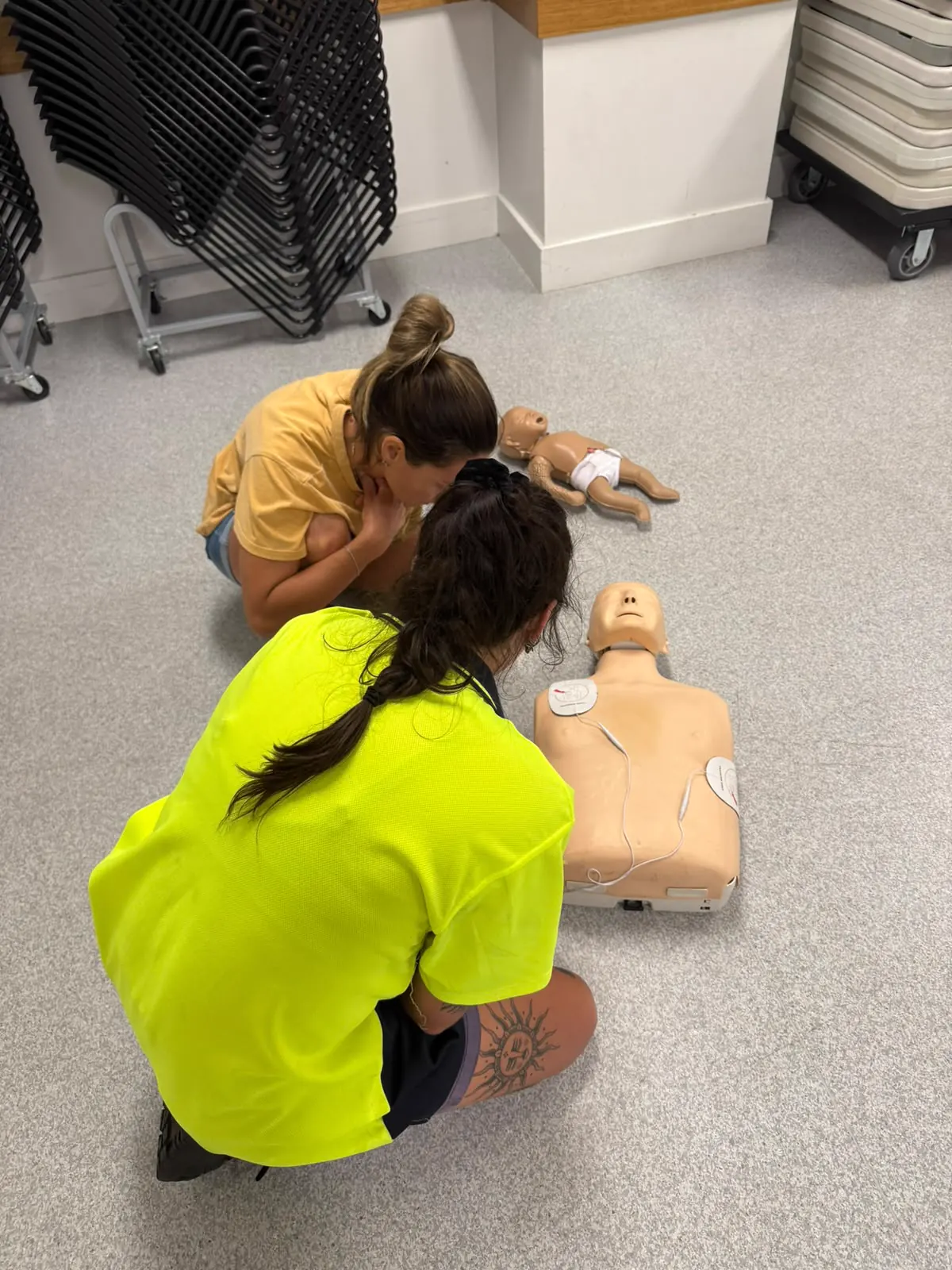
Why Schools Book Onsite First Aid Training
In schools, the operational constraint is always supervision ratios and timetables. You can't just send 12 staff to a training centre on the same day - the school can't function. Onsite training solves this: the trainer comes to you, sessions are split around the timetable, and staff get scenario practice that's relevant to the environment they actually work in.
The second reason onsite wins for schools: relevance. A generic public first aid course gives you compressions on a manikin in a sterile room. An onsite school session builds in playground scenarios, sports day responses, and the noise and distraction of a real campus environment.
Need onsite first aid training for your Gold Coast or Brisbane school? Request a quote and dates via SKLD Training
Which Courses Do School Staff Need?
This depends on the staff member's role. Most QLD schools use a combination of unit types across different staff categories:
| Staff type | Common unit(s) needed | Renewal cycle |
|---|---|---|
| Nominated first aider (teacher, admin) | HLTAID011 Provide First Aid | Every 3 years + annual CPR |
| Broad staff CPR coverage (teaching aides, support, volunteers) | HLTAID009 Provide cardiopulmonary resuscitation | Annually |
| OSHC / care-context roles | HLTAID012 Provide First Aid in an education and care setting | Every 3 years + annual CPR |
Sources: HLTAID011, HLTAID009, HLTAID012 - training.gov.au
Gold Coast School Zones: Where We Deliver
Onsite delivery is structured around the school's location and calendar. Here's how training demand maps across the Gold Coast school regions:
- Palm Beach / Currumbin / Tugun (south GC): coastal primary and high schools, high community and early learning demand.
- Burleigh Heads / Varsity Lakes / Robina: growing school populations, mix of state and independent schools.
- Southport / Labrador (central GC): school clusters with allied health and corporate crossover. High demand for HLTAID011 and HLTAID012 (OSHC adjacent).
- Helensvale / Coomera / Pimpama / Ormeau (north GC): rapidly growing catchment with newer schools and younger staff demographics.
- Oxenford / Mermaid Waters / Clear Island Waters: mid-corridor school demand for onsite CPR and first aid renewal.
Brisbane School Zones: Where We Deliver
- Northside (Chermside, Aspley, Zillmere): high-density state school zone, frequent staff CPR renewal demand.
- Westside (Indooroopilly, Toowong, Kenmore): independent and state schools, senior staff first aid refreshers.
- Southside (Runcorn, Sunnybank, Eight Mile Plains): diverse school population, multilingual support roles with HLTAID012 demand.
- Inner CBD / Spring Hill / Fortitude Valley: small school footprint but high professional development cluster demand.
How an Onsite School Session is Structured
A well-run onsite school session has four clear phases:
- Setup and briefing (10–15 minutes): trainer confirms group size, roles, and assessment focus. Clear expectations = less anxiety = better performance.
- Knowledge component: structured review of emergency response principles relevant to the unit. Kept brief - this is not a lecture series.
- Practical stations: CPR compressions and AED on manikins; bandaging and patient assessment scenarios; relevant school-specific emergency simulations.
- Scenario-based assessment: individuals demonstrate competency in realistic conditions - not just once, but in a flowing scenario where they must respond, delegate, and communicate.
School-Specific Scenarios That Matter
Generic training focuses on adult collapse in a clear room. School training should build in the reality of campus environments:
| Scenario | What staff practice | Why it's different in a school |
|---|---|---|
| Playground collapse / cardiac event | Recognition, calling for help, starting CPR, AED retrieval | Noise, bystanders (students), distance from AED and first aid kit |
| Asthma or anaphylaxis episode | Recognising early signs, locating medication, following the action plan, calling 000 | Supervision continuity; who stays with the student, who manages the class |
| Sports injury / fall | Patient assessment, bleeding control, immobilisation, managing spectators | Emotional student bystanders add pressure; response must be calm and structured |
| Choking (early learning, OSHC) | Recognition, back blows, abdominal thrusts, infant technique if applicable | Higher risk in younger cohorts; fast decision making with small airways |
| Seizure management | Safety, timing, recovery position, 000 escalation criteria | Student privacy, parent contact, documentation chain |
Planning Onsite School Training Without Disrupting the Day
Step 1: Decide who needs what unit
Separate the staff list into three groups: HLTAID009 (annual CPR refresh), HLTAID011 (nominated first aiders), HLTAID012 (OSHC/care roles). Some staff may need both HLTAID009 and HLTAID012 if they're in an education/care setting due for CPR renewal specifically.
Step 2: Pick a low-disruption window
Options that work well for QLD schools:
- Pupil-free days / teacher professional development days - ideal for full coverage without supervision headaches
- Staff meeting blocks (split schedule): smaller groups trained in sequence while others cover
- Lunch + after-school sessions: works for CPR-only refreshers (shorter duration)
Step 3: Choose the room
- Enough clear floor space for kneeling and manikin rotation (hall or large staffroom preferred for groups of 10+)
- Accessible without routing through active classrooms
- Ventilated - CPR compressions generate heat quickly
Step 4: Nominate a coordinator
One person: attendance list, room preparation, evidence collection after training. This is not admin overhead - it's what makes compliance documentation work without a follow-up chase.
Step 5: Evidence workflow
Folder ready before training starts: named by staff member, unit, and date. Completion certificates are issued by the RTO after successful assessment; store PDFs immediately to avoid the "I can't find my certificate" call six months later.
Compliance Line (Required)
Training and assessment delivered on behalf of Allens Training Pty Ltd RTO 90909.
FAQ
What first aid training do QLD school staff need?
Most QLD schools use a combination: HLTAID009 (CPR annually for broad staff coverage) and HLTAID011 (First Aid every 3 years for nominated first aiders). OSHC and early childhood roles may need HLTAID012. Check your school's WHS and employer policy for specific requirements.
How often do school staff need to renew CPR?
CPR (HLTAID009) is commonly renewed annually. First Aid units (HLTAID011, HLTAID012) are renewed every 3 years under QLD workplace guidance. (WorkSafe QLD Code of Practice 2021)
Can first aid training be done onsite at our school?
Yes - we bring all equipment (manikins, AED trainers, scenario gear). You need access to a clearable space. Request an onsite school booking via SKLD Training.
What is HLTAID012 and when do schools need it?
HLTAID012 Provide First Aid in an education and care setting is designed for regulated childcare, OSHC, and early learning roles. It includes infant and child first aid scenarios aligned to the care environment. Schools with onsite OSHC programs commonly book HLTAID012 for those staff. (training.gov.au)
How do we train without pulling staff off class?
Roster waves - train groups while others cover class supervision. Pupil-free days work for full-team training. Staff meeting blocks or lunch sessions work well for CPR-only refreshers.
Does training include asthma and anaphylaxis scenarios?
Yes - first aid training includes allergic reactions and asthma response as part of the unit scope. Specific ASCIA anaphylaxis e-training is a separate pathway some schools also use to standardise plan-based response steps.
Sources (Official)
Related Articles
CPR Training for Schools in QLD: How to Train Staff Across Timetables, Maintain Supervision, and Build Real Emergency Confidence
Schools search for CPR training when they need coverage across all staff - not just one person with a certificate sitting in an office. This guide shows how to structure onsite CPR sessions around QLD school timetables, maintain supervision during training, and build practical scenario confidence with school-relevant emergencies.
Read more →Anaphylaxis Training for QLD Schools and Childcare: EpiPen Technique, ASCIA Guidelines, and How Onsite Training Builds Real Confidence on the Gold Coast & Brisbane
Anaphylaxis training searches spike when a school or childcare service enrols a student with a documented allergy action plan - or worse, when staff realise they've never actually used an EpiPen trainer. This guide explains what anaphylaxis training covers for QLD schools and childcare, how ASCIA guidelines shape the response, how HLTAID011 and HLTAID012 address it, and why onsite scenario training is the only approach that builds genuine response confidence.
Read more →Which First Aid Course Do You Need? Industry-by-Industry Guide for Gold Coast Workers (2026)
Not sure which first aid course to book on the Gold Coast? This industry-by-industry guide tells you exactly which course your job requires - whether you're a tradie, childcare worker, PT, hospitality worker, or office staffer - with unit codes, durations, and renewal schedules compared side by side.
Read more →Ready to Book Your Training
SKLD Training delivers nationally recognised first aid courses directly to your Gold Coast workplace.
View Available Dates