Anaphylaxis Training for QLD Schools and Childcare: EpiPen Technique, ASCIA Guidelines, and How Onsite Training Builds Real Confidence on the Gold Coast & Brisbane
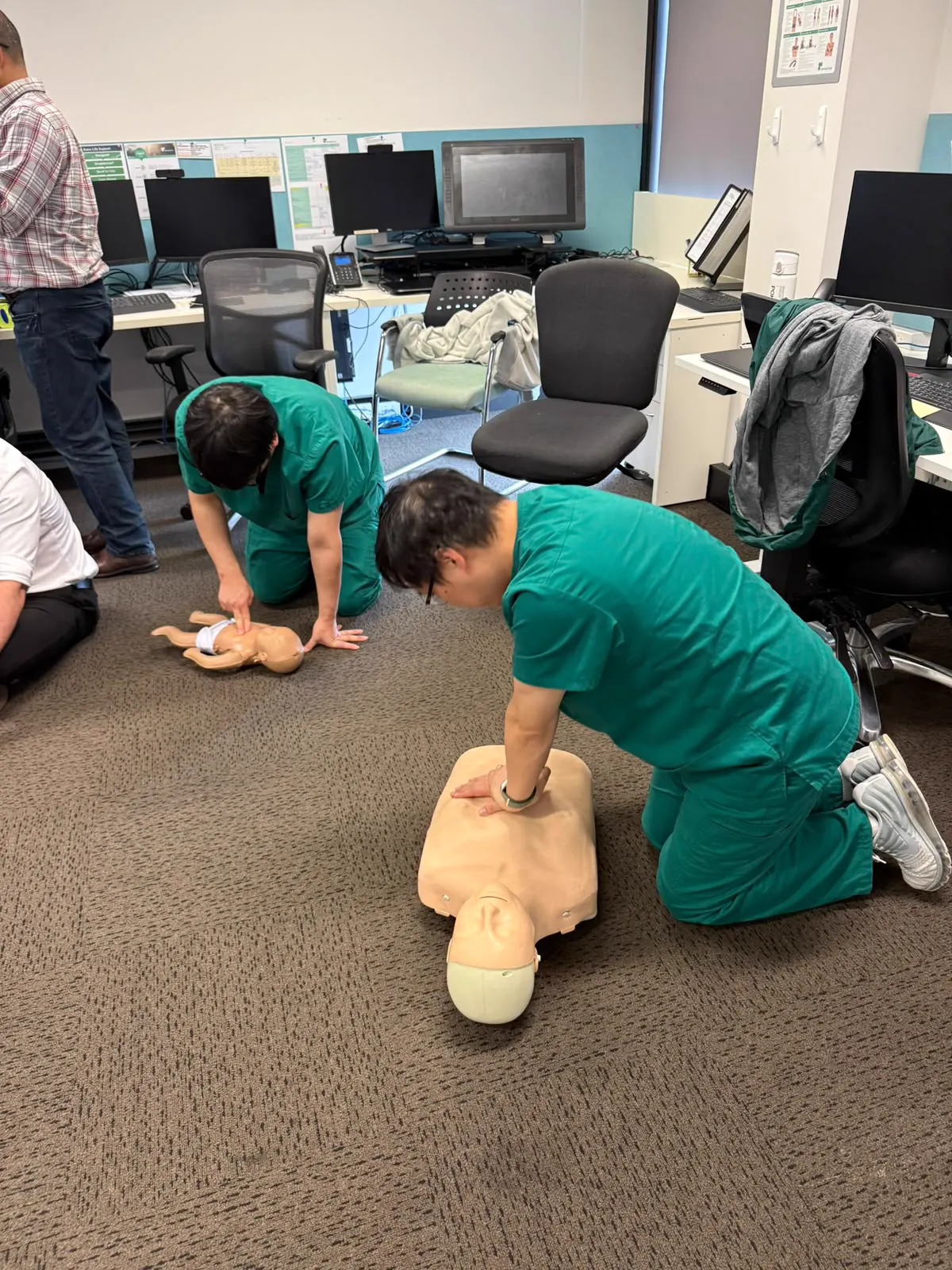
What Anaphylaxis Training Actually Involves
"Anaphylaxis training" in a school or childcare context means more than knowing what an EpiPen is. Genuine preparedness requires:
- Recognition of mild vs severe allergic reactions - and the escalation point where mild becomes life-threatening
- ASCIA action plan literacy - reading and interpreting the student's individual plan, which varies by allergen, by severity history, and by prescribed medication
- Auto-injector technique - physically practising with an EpiPen trainer (blue cap, orange tip, outer thigh application), because hesitation in a real event costs seconds
- Team response mechanics - who calls 000, who gets the EpiPen from the known location, who manages the other children
- Post-injection response - what happens after the EpiPen: the person must remain flat, monitored, and not be allowed to stand, even if they feel better
Book anaphylaxis-focused first aid training for your Gold Coast or Brisbane school: Request an onsite quote via SKLD Training
Anaphylaxis: Recognising the Signs
| Mild to moderate reaction | Severe reaction (anaphylaxis) |
|---|---|
| Swelling of face, lips, eyes | Difficult or noisy breathing |
| Hives, welts, or skin redness | Swollen tongue |
| Tingling in mouth | Stridor (high-pitched sound when breathing) |
| Abdominal pain, vomiting | Wheeze or tight chest |
| Runny nose | Difficulty swallowing, speaking, or hoarse voice |
| Dizziness, collapse, pallor, loss of consciousness |
(ASCIA Anaphylaxis e-Training – allergy.org.au)
Anaphylaxis can develop within minutes of exposure to an allergen. Do not wait to see if it gets better. If severe signs are present - give adrenaline and call 000.
ASCIA First Aid Steps for Anaphylaxis
The Australasian Society of Clinical Immunology and Allergy (ASCIA) provides the standard anaphylaxis action plan used in QLD schools and childcare services:
- Act quickly - anaphylaxis is a medical emergency
- Lay the person flat - do not allow them to stand up or walk. If breathing is difficult, allow to sit, but not stand.
- Give adrenaline auto-injector - this is the first treatment. Antihistamines do NOT treat anaphylaxis and should not delay adrenaline.
- Call 000 for an ambulance immediately after giving adrenaline
- If no improvement after 5 minutes and a second auto-injector is available - give a second dose
- Keep the person lying flat until paramedics arrive - even if they say they feel better
- If CPR is required - start CPR if the person is unconscious and not breathing; call 000 if not already called
(ASCIA Guidelines for Allergic Reactions and Anaphylaxis)
EpiPen Technique: What Staff Must Practise
Using an EpiPen trainer device builds muscle memory for the real event. The steps:
- Grip the auto-injector firmly in the dominant hand
- Remove the blue safety cap by pulling firmly (do not put fingers over the orange tip)
- Hold orange tip against the outer mid-thigh - can be given through clothing
- Push down firmly and hold for 3 seconds until a click is heard/felt
- Remove the auto-injector and massage the injection site for 10 seconds
- Note the time of injection - document for handover to paramedics
Practise on the trainer device - not the real EpiPen. Trainer devices are spring-loaded, safe (no needle), and identical in feel to the real auto-injector.
How Anaphylaxis Training Fits into HLTAID011 and HLTAID012
| Unit | Anaphylaxis coverage | EpiPen trainer practice | Action plan literacy |
|---|---|---|---|
| HLTAID011 Provide First Aid | Anaphylaxis recognition; calling 000; general first aid positioning | Typically included in practical stations | General - not individual plan context |
| HLTAID012 Provide First Aid in an education and care setting | Anaphylaxis including auto-injector use; ASCIA plan integration; child and infant-specific | Yes - included as assessed practical | Education and care context; plan retrieval and implementation |
| ASCIA e-Training (online, separate) | Deepest anaphylaxis content; full ASCIA guidelines; individual plan reading | Demonstration content (online); no physical practice | Comprehensive - designed for school and childcare staff specifically |
ASCIA e-Training vs HLTAID012: Which Does Your School Need?
Most QLD schools and childcare services with students/children who have documented anaphylaxis plans need both:
- HLTAID011 or HLTAID012 for nationally recognised first aid competency (physical skills, CPR, broader emergency response)
- ASCIA e-Training for anaphylaxis-specific guidelines, action plan literacy, and auto-injector protocol depth
They complement each other - HLTAID gives the practical skills base, ASCIA e-Training gives the protocol and plan-specific knowledge.
Gold Coast and Brisbane Schools and Childcare: Where This Matters
- Gold Coast (Robina, Coomera, Palm Beach, Southport): primary school and childcare clusters with high student enrolments - anaphylaxis action plans are commonly managed across 5–15% of the student body in many schools.
- Brisbane (North Lakes, Kelvin Grove, Runcorn, Indooroopilly): multicultural school communities with diverse allergy prevalence; ASCIA and HLTAID012 commonly required together for teachers and childcare workers.
Running an Onsite Anaphylaxis Response Drill
For schools and childcare with multiple students with action plans, an annual onsite response drill is often more valuable than just attendance at a training day. A basic drill format:
- Trigger: trainer announces "Student [name] has just displayed signs of anaphylaxis at the lunch table."
- Response: nearest staff member calls for the first aider by name. First aider retrieves the plan and EpiPen from the known location.
- Action: EpiPen trainer administered on the demonstration pad. 000 called (simulated). Other children managed by second staff member.
- Debrief: time the response. What was slow? Was the plan accessible? Was the EpiPen location known to everyone in the room?
Compliance Line (Required)
Training and assessment delivered on behalf of Allens Training Pty Ltd RTO 90909.
FAQ
Do QLD schools have to train staff in anaphylaxis response?
QLD schools with students who have documented anaphylaxis action plans are expected to have staff who can action those plans, which requires both anaphylaxis-specific knowledge (ASCIA) and practical first aid competency (HLTAID011 or HLTAID012). Requirements vary by Education Queensland and Catholic/independent sector policies - confirm with your employer.
What's the difference between ASCIA training and first aid training?
ASCIA anaphylaxis e-training is a web-based program specifically covering anaphylaxis guidelines, action plan literacy, and auto-injector use. It doesn't replace HLTAID011/012 - which covers CPR, bleeding, choking, and the full first aid spectrum. Most schools and childcare services need both. (ASCIA e-Training)
Can a teacher give an EpiPen to a student in QLD?
In Queensland, lay first aiders are generally permitted to administer an adrenaline auto-injector in a life-threatening emergency. Always follow the student's documented action plan and call 000. Confirm current QLD-specific guidance and your school's policy with your principal or employer.
How often does anaphylaxis training need to be renewed?
HLTAID011 or HLTAID012 is renewed every 3 years (with annual CPR). ASCIA e-training is typically required annually or biennially - check your employer's and ASCIA's current guidance.
Where can I book anaphylaxis and first aid training near me on the Gold Coast?
Enquire via SKLD Training for HLTAID012 onsite sessions including anaphylaxis response, EpiPen trainer practice, and CPR - Gold Coast and Brisbane school and childcare delivery.
Sources (Official)
- ASCIA Anaphylaxis e-Training – allergy.org.au
- ASCIA Guidelines for management of anaphylaxis – allergy.org.au
- HLTAID012 Provide First Aid in an education and care setting – training.gov.au
- HLTAID011 Provide First Aid – training.gov.au
- First aid in the workplace Code of Practice 2021 (PDF) – WorkSafe QLD
Related Articles
Asthma and Anaphylaxis Training for QLD Schools and Education & Care Settings: What Staff Need, How Response Plans Work, and How Training Standardises the Response
Asthma and anaphylaxis are two of the most common emergencies in QLD schools and childcare settings. Generic first aid training covers the basics, but schools and education and care services benefit from targeted scenario practice aligned to individual health management plans and the ASCIA guidelines. This guide explains how asthma and anaphylaxis response fits into first aid training on the Gold Coast and Brisbane.
Read more →HLTAID011 vs HLTAID012 vs HLTAID009: Which First Aid Course Do You Need in QLD? (Workplaces, Schools, Childcare, NDIS)
People search 'HLTAID011 vs HLTAID012' because they don't want to book the wrong course. This guide explains the difference in plain English, maps each unit to the roles that need it - workplaces, schools, childcare, NDIS - and gives a clear decision table for Gold Coast and Brisbane teams.
Read more →First Aid Training for Schools on the Gold Coast & Brisbane: What Staff Need, How Onsite Sessions Work, and What Makes Training Actually Stick
Schools search for first aid training when they need an onsite solution that covers staff requirements without pulling people off class for a full day. This guide explains which units QLD school staff commonly need, how onsite sessions are structured, and how to plan training around timetables - specifically for Gold Coast and Brisbane schools.
Read more →Ready to Book Your Training
SKLD Training delivers nationally recognised first aid courses directly to your Gold Coast workplace.
View Available Dates