AED Maintenance Checklist: How to Keep a Workplace Defibrillator Ready (2026)
An automated external defibrillator can save a life, but only if it is accessible and ready to use. Buying an AED is not the end of the job. Workplaces need a simple system for checking the device, replacing expired pads, confirming battery status, keeping signage visible, and making sure staff know where the AED is located.
Why AED Maintenance Matters
During sudden cardiac arrest, early CPR and early defibrillation are critical. Modern AEDs are designed for public use and provide voice prompts, but a device that is hidden, flat, expired, or locked away creates delay. A monthly visual check is a low-effort way to reduce that risk.
Monthly AED Checklist
| Check | What to Confirm |
|---|---|
| Status indicator | The device shows ready, OK, or the equivalent manufacturer status |
| Battery | Battery is installed, within date, and no warning indicator is showing |
| Electrode pads | Pads are sealed, undamaged, and not expired |
| Adult and child pads | Child pads or child mode are available if children may be present |
| Cabinet or case | AED is visible, clean, dry, and accessible |
| Signage | Signs point to the AED from normal work and public areas |
| Rescue kit | Gloves, scissors, razor, towel, and face shield are present if supplied |
| Inspection record | Date, checker name, and any action taken are recorded |
Where Should an AED Be Located?
The best location is the one that allows fast retrieval. Common choices include reception, gym floors, pool entries, clubhouses, school administration areas, workshops, staff rooms, and public foyers. Avoid placing the AED in a locked office, behind stock, in an unmarked cupboard, or somewhere only one manager can access.
Who Should Own the Check?
Assign a named person and a backup. The responsible person might be the WHS officer, site supervisor, practice manager, centre director, facilities manager, head trainer, or venue manager. The backup matters because AED checks are easily missed during leave or staff turnover.
Staff Awareness Is Part of Maintenance
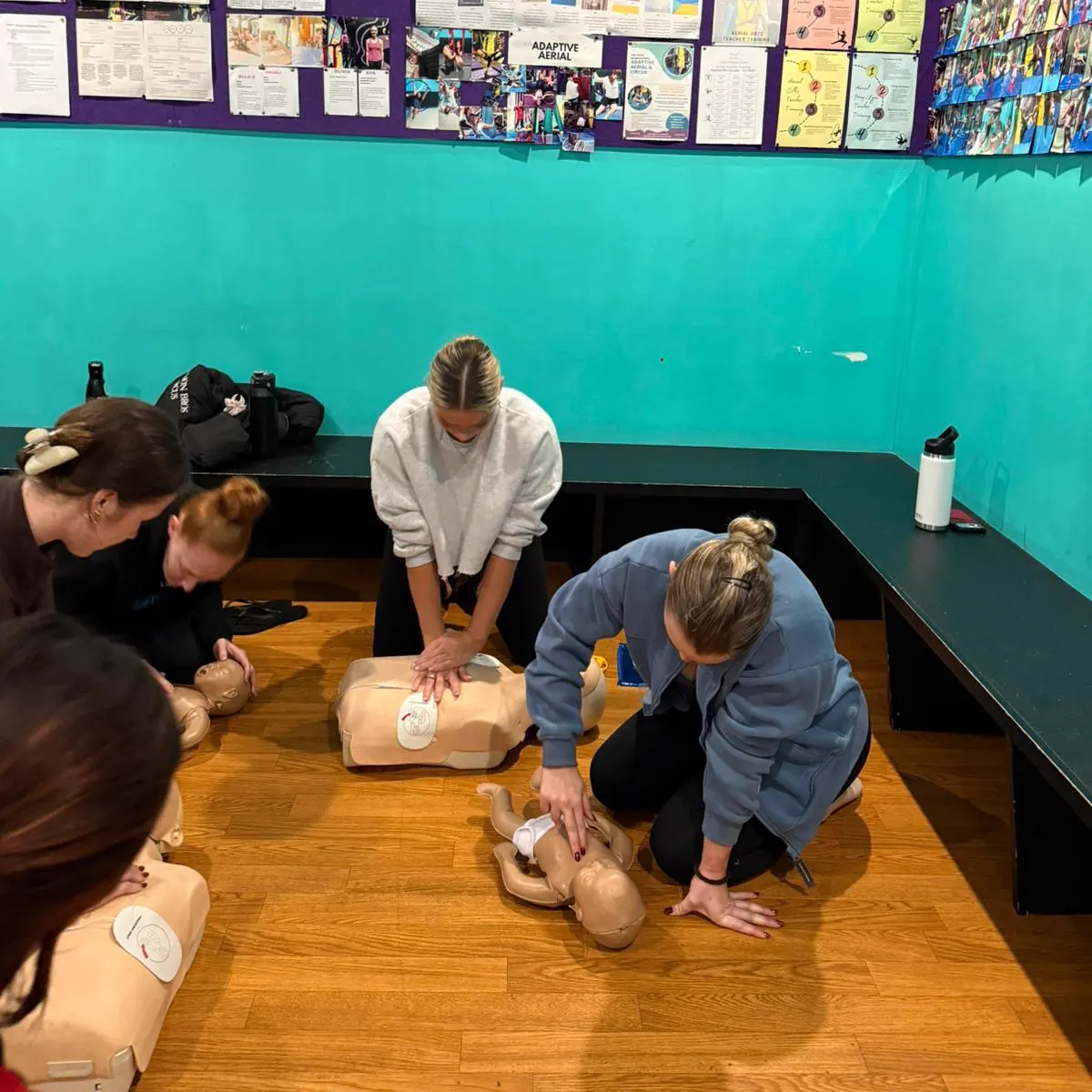
A device can pass every technical check and still fail operationally if nobody knows where it is. Add AED location to staff induction. Include AED retrieval in first aid drills. During CPR training, staff should practise turning on a trainer AED, applying pads, standing clear during analysis, and resuming compressions when instructed.
What to Do After an AED Is Used
- Continue following emergency services instructions during the incident.
- After handover, remove the AED from service until it is checked.
- Replace electrode pads and any used rescue kit items.
- Check battery status and device readiness.
- Download event data if required by the device or workplace process.
- Record the incident and restocking actions.
- Offer a debrief and support to staff involved.
Common AED Management Mistakes
- Expired pads: pads dry out over time and may not adhere properly.
- No child option: sites with children should confirm paediatric capability.
- Poor signage: staff know an AED exists but cannot find it quickly.
- No inspection log: nobody can show when it was last checked.
- No training: staff hesitate because they have never touched a trainer AED.
Frequently Asked Questions
How often should an AED be checked?
Follow the manufacturer's instructions. A monthly visual check is a practical minimum for many workplaces, with extra checks after use, drills, renovations, or site moves.
Can an untrained person use an AED?
Yes. AEDs are designed to guide users with prompts. Training is still strongly recommended because it improves confidence, pad placement, CPR quality, and teamwork.
Do AED pads expire?
Yes. Electrode pads have expiry dates. They should be replaced before expiry and immediately after use.
Sources
- Australian Resuscitation Council
- HLTAID009 Provide Cardiopulmonary Resuscitation - training.gov.au
- WorkSafe Queensland
Training and assessment delivered on behalf of Allens Training Pty Ltd RTO 90909.
Related Articles
AED Training for Workplaces: How to Use a Defibrillator, Why It Matters, and How Gold Coast & Brisbane Teams Build Real Confidence
Most AED training fails because staff do it once and never practise again. When a real cardiac arrest happens, hesitation at the AED button costs time. This guide explains what good AED training looks like for Gold Coast and Brisbane workplaces, what HLTAID009 and HLTAID011 assessment requires, and how to build repeatable confidence rather than a certificate that says you once pressed the right button.
Read more →2026 Workplace First Aid Compliance Checklist for Queensland Employers (WHS Act)
A practical, printable WHS first aid compliance checklist for Queensland employers. Audit your risk assessment, first aider ratios, certificate currency, kit contents, and documentation against the First Aid in the Workplace Code of Practice 2021 - section by section, item by item.
Read more →Which First Aid Course Do You Need? Industry-by-Industry Guide for Gold Coast Workers (2026)
Not sure which first aid course to book on the Gold Coast? This industry-by-industry guide tells you exactly which course your job requires - whether you're a tradie, childcare worker, PT, hospitality worker, or office staffer - with unit codes, durations, and renewal schedules compared side by side.
Read more →Ready to Book Your Training
SKLD Training delivers nationally recognised first aid courses directly to your Gold Coast workplace.
View Available Dates